
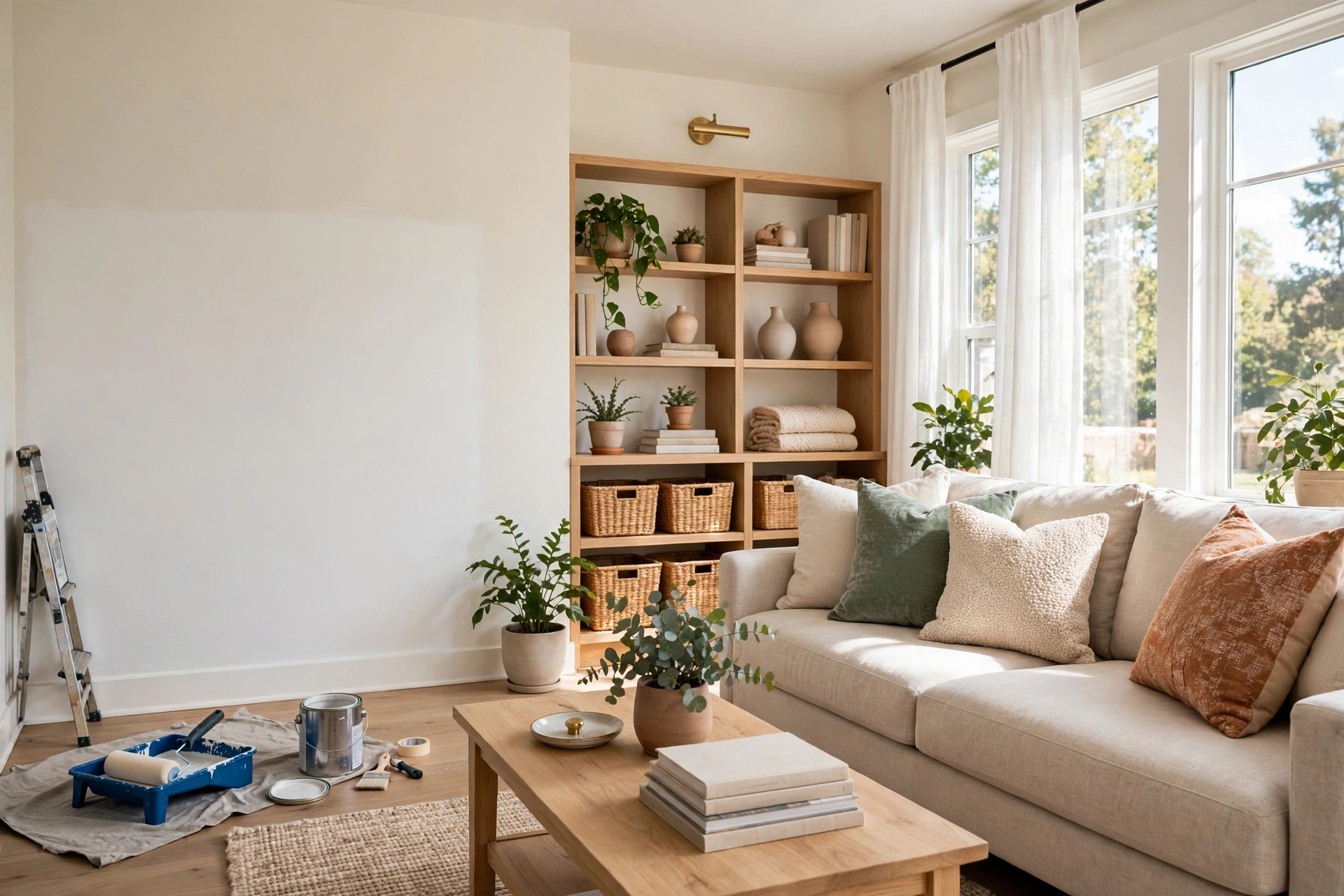
What Makes a Living Space Feel Brand New Again
A living space feels brand new when it is brighter, tidier, and easier to use — not when it has been expensively rebuilt. A fresh coat of paint, better lighting, a rearranged sofa, and a weekend of decluttering can change how a room feels more than a new piece of furniture ever will, because the feeling of newness comes from light, air, and order rather than from spending. The projects in this guide are simple, affordable, and achievable in a weekend, and each one is chosen for the size of its impact relative to its effort.
Start by looking at the room the way a guest would: what is the first thing you notice, what looks tired, and what is in the way? The answer usually points to one or two projects, not ten. Do those first, live with the result for a week, and then choose the next project — a home refreshed in stages feels new for months, while a home refreshed all at once in a single exhausting weekend often feels unfinished by Monday.
A Weekend Paint Refresh That Resets the Whole House
Painting remains the easiest and most effective way to update a living space, and a single weekend is enough for most rooms. A new wall colour can shift the mood of a room instantly, making it feel brighter, cosier, or more modern, and painting trim, doors, and baseboards in a crisp white gives an older home a clean, finished appearance. Choose soft tones for calm, or a bold colour on one feature wall to create contrast and depth without repainting the whole room.
Decluttering and Storage That Free the Room You Already Have
Before buying anything new, free the room you already have. Decluttering is the cheapest home improvement project of all, and it changes a space more than most purchases: clear surfaces, empty shelves, and open floors make a room feel larger, calmer, and genuinely new. Sort each room into keep, donate, and discard, and be honest about the things you have not used in a year — a home that holds only what you use is a home that is easy to keep tidy.
Lighting Swaps That Change the Mood in an Afternoon
Lighting is often underestimated, yet it has the power to redefine a room in a single afternoon. Replacing a dated ceiling fixture with a modern LED model, adding a pendant over the dining table, or fitting a pair of sconces in a living room instantly elevates the space, and swapping bulbs alone can change the feel dramatically: warm-toned bulbs create a cosy atmosphere, while cool-toned bulbs enhance brightness and clarity. A dimmer switch is one of the cheapest upgrades in any home, because it lets one room serve both bright daytime work and soft evening relaxation.
Hardware, Fixtures, and Small Swaps With Outsized Impact
Small hardware swaps are the quiet heroes of a brand-new feeling home. Updating cabinet handles, drawer pulls, doorknobs, and faucets is a quick DIY project that refreshes kitchens and bathrooms instantly: swapping dated brass handles for sleek matte black, brushed nickel, or playful ceramic pulls modernises a space without a full remodel. A new showerhead, a solid lever handle on the front door, and smooth drawer runners remove daily irritation for very little money.
Walls With Personality: Accent Paint, Peel-and-Stick, and Gallery Displays
A single wall with personality can reset a whole living space. An accent wall in a bold navy, soft sage green, or warm terracotta creates contrast, depth, and visual interest, and it takes a fraction of the time and paint of a full room. Peel-and-stick wallpaper is an efficient way to bring patterns, textures, or even faux finishes such as wood and stone into a home, with zero long-term pressure — if you tire of it, it peels off without damaging the wall beneath.
A gallery wall is another way to give walls personality while making the home feel personal: framed photographs, artwork, and mementos arranged with consistent spacing tell your story and give a room a focal point. Hang art at eye level, roughly at the height of the furniture it sits above, and leave breathing space between frames. Open shelving serves a similar purpose, displaying favourite books, plants, and objects while freeing up cabinet space — but keep it edited, because a crowded shelf reads as clutter rather than display.
Floors, Grout, and Surfaces That Look New After a Deep Refresh
Floors and surfaces age visibly, and a deep refresh can make them look new without replacement. Regrouting bathroom or kitchen tiles is a small DIY job with a big visual impact: old grout makes even clean tiles look dated, while fresh grout or a grout pen makes the whole room look recently renovated. A deep clean of timber floors, a fresh rug over a worn patch, and repaired cracked tiles can modernise a room for a fraction of the cost of new flooring.
Worktops and tables deserve the same treatment. Sanding and repainting a worn dresser, refinishing a wooden shelf, or painting an old side table in a contemporary shade gives furniture a second life, and the transformation is immediate. In the kitchen, a clean, decluttered worktop with one or two beautiful objects on it looks newer than a worktop crowded with appliances, however expensive they are. Clean first, repair second, and replace only when cleaning and repair cannot rescue the surface.
Soft Furnishings and Greenery: The Fastest Feel-New Layer
Soft furnishings are the fastest way to change a room’s colour palette and mood, because they can be swapped in an afternoon. New cushion covers, throws, and curtains update a living room seasonally, while a bold area rug ties a seating group together and makes a strong style statement. Choose a rug large enough for the front legs of the sofa and chairs, and let its colours guide the cushions and throws so the room feels coordinated rather than collected at random.
Greenery is the other fast layer, and it costs very little. Indoor plants bring colour, texture, and life into any room, filling empty nooks with a designer’s touch — a tall plant in a bare corner, a trailing plant on a shelf, a small pot on a side table. Low-maintenance choices such as snake plants, pothos, and ZZ plants suit beginners and low-light rooms. Refreshing plant pots with a coat of paint is a small project that makes the whole arrangement feel intentional, and plants make a room feel cared for in a way that no object can.
A One-Weekend Project Plan for a Brand-New Feeling Home
The fastest way to a brand-new feeling home is a planned weekend, not a frantic one. On Saturday morning, declutter one room completely and clean it thoroughly — this alone often makes the room feel transformed. Saturday afternoon is for paint: one accent wall, or the trim and doors of the room you use most. Sunday is for the finishing layer: swap the lighting bulbs, change the hardware, hang the art, arrange the soft furnishings, and add a plant.
- Saturday morning — declutter and deep clean one room completely.
- Saturday afternoon — paint one accent wall, or refresh trim and doors.
- Sunday morning — swap hardware, bulbs, and drawer pulls.
- Sunday afternoon — hang art, arrange cushions and throws, add greenery.
- Sunday evening — live in the room for a week before choosing the next project.
Simple Projects That Go Wrong When Homeowners Rush Them
Simple projects go wrong most often when they are rushed, and the mistakes are almost always the same. Painting without preparation — over dirty walls, glossy paint, or unfilled holes — peels and looks worse than the wall it replaced. Hanging art or shelves without finding a stud or using the right fixing ends with holes in the plaster and a shelf on the floor. Ordering hardware, wallpaper, or flooring without measuring turns a cheap project into an expensive one.
The other common error is starting too many projects at once. Three half-finished rooms and an exhausted weekend feel worse than one finished room that looks and feels complete, so finish each project before starting the next. Work in daylight where possible, read the instructions on adhesives and paints rather than guessing drying times, and keep the room usable while you work — a home improvement project should improve the home, not make it unliveable for a week.
Simple DIY Projects That Still Need a Professional’s Hands
Most of the projects in this guide are safe DIY work, but know where to stop. Swapping a light fixture on existing wiring is usually fine, but any new circuit, work inside the electrical panel, or wiring in a bathroom needs a licensed electrician. Hanging a heavy mirror or shelf is DIY; removing a wall, even a small one, is not — it may be load-bearing, and it may hide wiring, pipes, or ducting.
The same judgement applies to older homes: test for lead paint before sanding painted surfaces in a home built before lead paint was banned, and treat suspected asbestos, serious mould, or any sign of structural movement as a professional job, not a weekend project. A good rule is that if a mistake could cause a fire, a flood, a fall, or a health risk, it is not a DIY saving — it is a risk. Spend a little on the right expert and keep the simple, safe projects for yourself.
Final Thoughts: Simple Projects, a Brand-New Feeling Living Space
A living space feels brand new when light, order, and personality return to it — and none of that requires a major renovation. One weekend of decluttering and paint, an afternoon of lighting and hardware swaps, a wall with character, and a layer of soft furnishings and greenery can transform a familiar room into one you fall in love with again. Start with the room you live in most, finish one project before starting the next, and let the home improve in stages — the new feeling lasts far longer that way.
A one-weekend plan for a brand-new feeling home — one room, finished properly, beats three half-finished rooms.
Simple Home Improvement Project FAQs
What is the easiest home improvement project to make a room feel new?
Painting is usually the easiest high-impact project, followed closely by decluttering and better lighting. Together, a fresh wall colour, a tidy room, and a warmer light can make a living space feel brand new in a single weekend, for a modest spend.
How can I refresh my living space without spending much money?
Start with what costs nothing: declutter, rearrange the furniture, clean the windows, and move lamps and art between rooms. Then spend small amounts where they show most — paint, cushion covers, hardware, and a plant — before considering any larger purchase.
Which simple projects add the most value to a home?
Paint, lighting, hardware, and curb appeal add the most perceived value for the least money, because buyers and guests notice them first. Regrouting, a deep clean of floors and surfaces, and tidy storage also help, because a home that looks cared for is a home that feels valuable.
How long does a simple room refresh take?
Most rooms can be refreshed in a weekend: a morning to declutter and clean, an afternoon to paint, and a day for hardware, lighting, and finishing touches. Larger rooms or several rooms together will take longer, so plan one room at a time rather than trying to finish the whole house at once.
Can beginners do these home improvement projects?
Yes — painting, decluttering, hardware swaps, peel-and-stick wallpaper, and soft furnishing changes are all realistic beginner projects. Leave new electrical circuits, structural work, plumbing changes, and anything involving lead paint or asbestos to licensed professionals.
How often should I refresh my living space?
A light refresh — new cushions, a plant, a rearranged layout — works well every season, while a deeper refresh with paint and hardware suits every two to three years. The best rhythm is to refresh when a room starts to feel tired rather than on a fixed schedule, and to do one room at a time.